Introduction
Selecting a tank trailer for hazardous waste liquid transport is fundamentally different from choosing a standard fuel or chemical tanker. In this niche industry, regulatory compliance, corrosion resistance, and risk control matter far more than initial purchase price.
Environmental service companies, hazardous waste management operators, and industrial waste transport providers must evaluate tank trailers not only as transport equipment, but as critical compliance assets.
This guide focuses on the key technical, regulatory, and operational factors that determine whether a tank trailer is suitable for hazardous and industrial waste liquid transport.
Why Standard Tank Trailers Are Not Enough
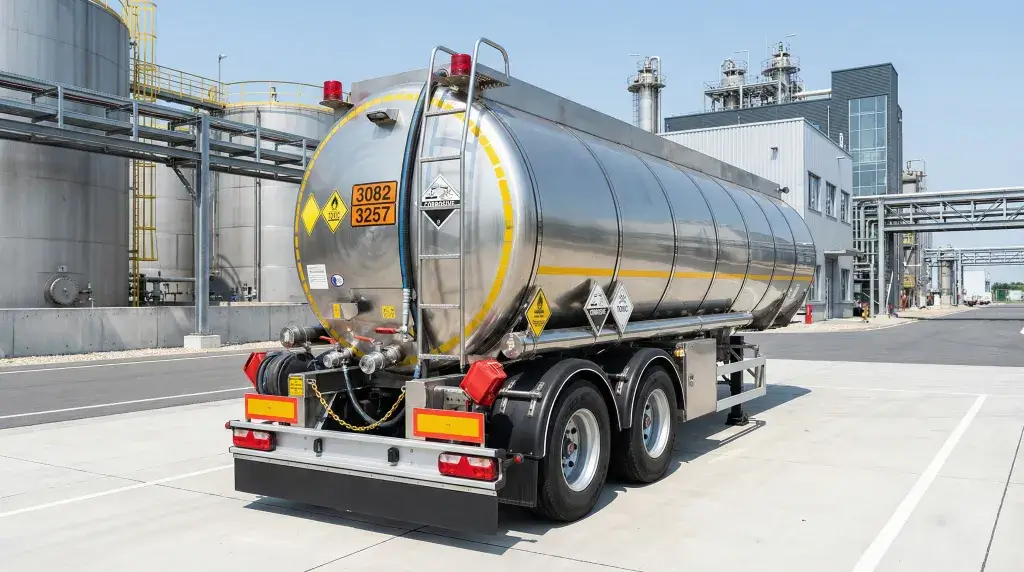
Many operators mistakenly assume that a fuel or general chemical tanker can handle hazardous waste liquids. In reality, hazardous waste transport introduces additional risks:
-
Highly corrosive liquids
-
Mixed or unknown chemical compositions
-
Strict environmental and transportation regulations
-
Severe penalties for leaks or non-compliance
As a result, hazardous waste transport requires purpose-built tank trailers, not modified standard units.
Key Factors When Selecting a Hazardous Waste Tank Trailer
1. Tank Material and Corrosion Resistance
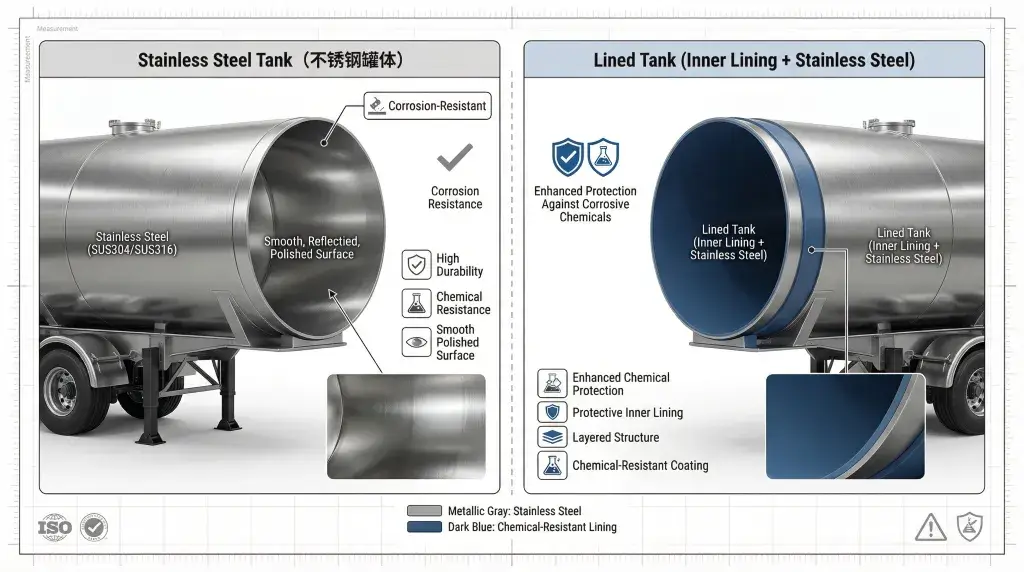
Hazardous waste liquids often contain acids, alkalis, or reactive compounds. Choosing the wrong tank material can lead to rapid corrosion and safety failures.
Recommended options include:
-
Stainless steel tanks (for high chemical resistance)
-
Internal linings such as PTFE or epoxy coatings
-
Smooth internal surfaces to reduce residue buildup
2. Sealing Systems and Leak Prevention
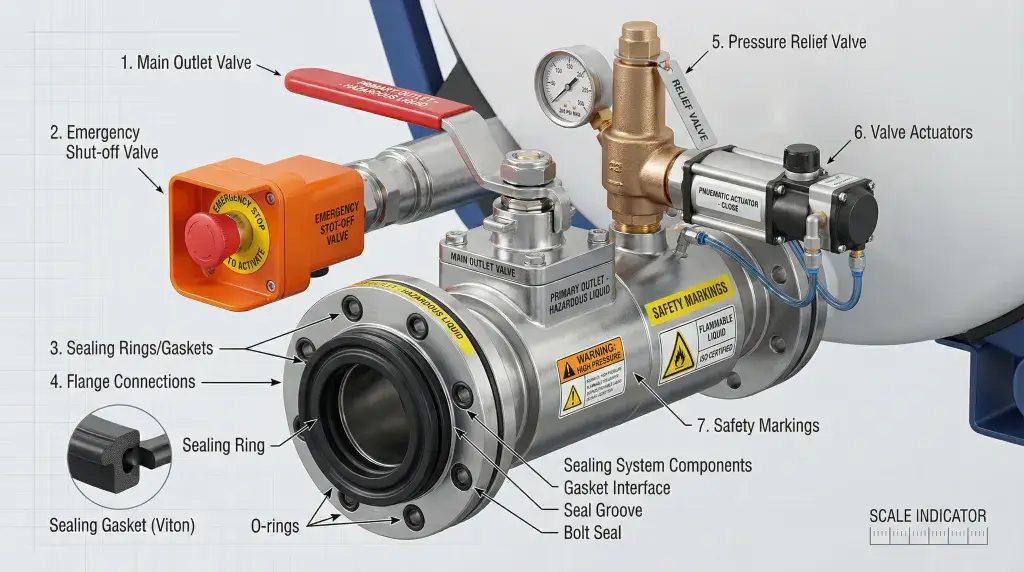
Leak prevention is the most critical requirement in hazardous waste transport.
Key features to look for:
-
Multi-layer sealing systems
-
High-quality discharge valves
-
Emergency shut-off mechanisms
-
Secondary containment design
Even minor leaks can result in regulatory violations, environmental damage, and operational shutdowns.
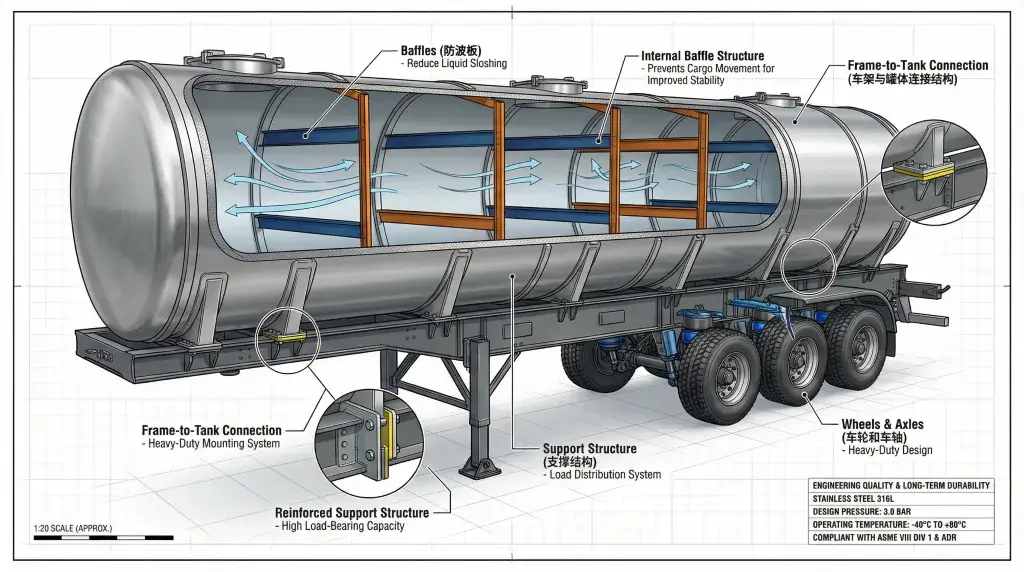
3. Structural Design and Tank Integrity
Unlike fuel transport, hazardous waste trailers may carry liquids with varying densities and flow characteristics.
Important structural considerations:
-
Reinforced tank shells
-
Proper baffling to control liquid surge
-
Strong mounting and frame design
A structurally robust trailer reduces fatigue damage and extends service life.
4. Regulatory Compliance and Certification
Compliance is not optional in hazardous waste transport.
Depending on the market, tank trailers may need to meet:
-
DOT (United States)
-
ADR (Europe)
-
UN hazardous materials standards
Buyers should ensure that certification documentation is available and complete, as this is often required during inspections and audits.
5. Ease of Cleaning and Maintenance
Hazardous waste transport often involves multiple waste types, increasing the need for frequent cleaning.
Look for:
-
Easy-access manways
-
CIP (Clean-In-Place) compatibility
-
Drainage designs that minimize residue
Efficient cleaning reduces cross-contamination risk and improves operational efficiency.
How Hazardous Waste Operators Make Purchasing Decisions
In contrast to general logistics buyers, hazardous waste transport companies follow a risk-based decision model:
-
Compliance with regulations
-
Safety design and leakage prevention
-
Tank material compatibility
-
Technical support and documentation
-
Price
This makes hazardous waste tank trailers a high-retention, long-term investment, rather than a commodity purchase.
Common Mistakes to Avoid
-
Using fuel tankers for hazardous waste liquids
-
Ignoring long-term corrosion risks
-
Focusing solely on purchase price
-
Overlooking certification and documentation support
Avoiding these mistakes can significantly reduce regulatory and operational risks.
Conclusion
Choosing the right tank trailer for hazardous waste liquid transport requires a deep understanding of chemical compatibility, safety systems, and regulatory requirements. Operators who invest in purpose-built hazardous waste tank trailers benefit from improved safety, compliance confidence, and long-term operational stability.
For environmental service companies and hazardous waste transport providers, the right tank trailer is not just equipment—it is a core part of risk management and compliance strategy.
For regulatory details, see our hazardous waste tank trailer compliance checklist.
通告: Hazardous Waste Tank Trailer Compliance Checklist (DOT / ADR / UN) – Trailer experts from China