
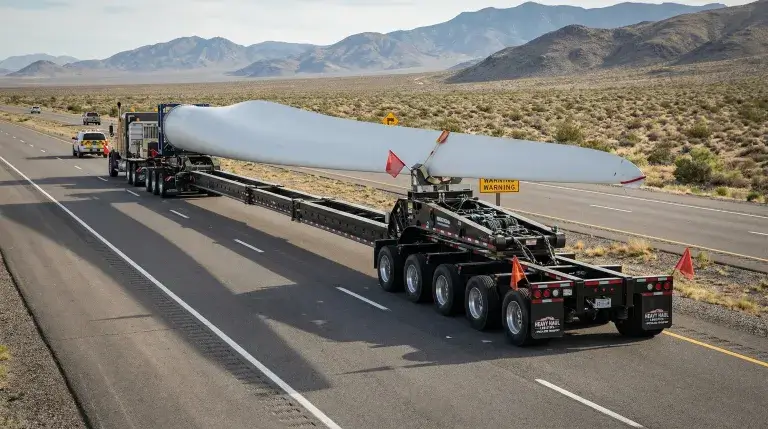
The global push for renewable energy has led to a dramatic increase in wind turbine size. In 2026, wind turbine blades exceeding 80 to 100 meters are becoming the industry standard. Transporting these massive components from factories to remote hilltop wind farms is a logistical challenge that requires more than just a standard flatbed.
In this guide, we will explore the critical features of the extendable wind blade trailer and how to select the best equipment to ensure safety, efficiency, and project profitability.
What is an Extendable Wind Blade Trailer?
An extendable wind blade trailer (also known as a telescopic semi-trailer) is a specialized transport vehicle designed to carry exceptionally long payloads. Unlike fixed-length trailers, these units feature a multi-stage telescopic beam that can expand or retract based on the blade’s length.
Key Components of a High-Performance Blade Trailer:
-
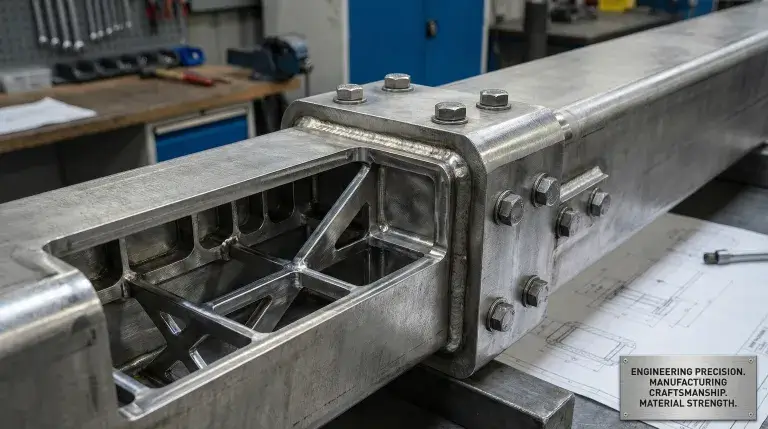
Telescopic Beam: Usually featuring 2 to 4 extension stages.
-
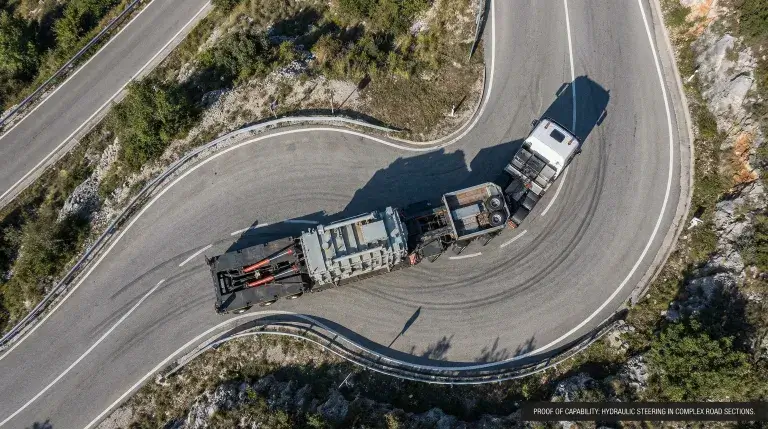
Hydraulic Steering System: Essential for navigating tight corners and mountainous terrain.
-
Gooseneck Design: Often adjustable to clear road obstacles.
-
High-Strength Steel: Built with materials like HG60 or Q690 to ensure maximum loading capacity with minimum self-weight.
Top 3 Challenges in Wind Blade Logistics (and How to Solve Them)
1. Navigating Tight Curves and Roundabouts
As blades get longer, the turning radius becomes the biggest obstacle. A standard trailer simply cannot make the turn.
-
The Solution: Look for trailers equipped with automatic and manual hydraulic steering systems. This allows the rear axles to turn independently, significantly reducing the turning circle and allowing the trailer to “snake” through narrow passages.
2. Payload Stability on Uneven Terrain
Wind farms are often located in remote areas with unpaved, steep, or uneven roads.
-
The Solution: Opt for hydraulic suspension or pendular axles. These systems provide better leveling capabilities and a higher stroke, ensuring the blade remains horizontal even when the wheels are on different elevations.
3. Shipping and Operational Costs
Transporting the trailer itself to the job site can be expensive.
-
The Solution: Modular designs. Our latest extendable trailers are designed for easy disassembly, allowing them to fit into standard containers for international shipping, saving you thousands in ocean freight costs.
Technical Specifications to Look For
When evaluating a manufacturer, pay attention to these technical benchmarks:
| Feature | Standard Requirement | Premium/Professional Grade |
| Extension Length | 45m – 56m | Up to 80m+ (Multi-stage) |
| Material | Q345 Carbon Steel | High-tensile HG60/Q690 Steel |
| Steering Angle | 35° – 45° | Up to 55° with Remote Control |
| Braking System | Standard WABCO | Dual-line EBS/ABS |
Why Invest in a Specialized Wind Blade Trailer?
While the initial investment in a telescopic wind blade trailer is higher than a standard flatbed, the ROI is driven by:
-
Reduced Damage Risk: Specialized padding and clamping systems prevent costly structural damage to the carbon-fiber blades.
-
Faster Project Completion: High-maneuverability means fewer road modifications (like widening corners) are needed before transport begins.
-
Regulatory Compliance: These trailers are built to meet international DOT or ADR standards, ensuring you pass safety inspections in any country.
Conclusion: Partnering with the Right Manufacturer
Selecting the right extendable trailer is not just about buying a vehicle; it is about choosing a logistics partner. At [Your Company Name], we specialize in engineering heavy-duty solutions tailored for the global wind energy market. Our trailers are rigorously tested to withstand the harshest environments from the deserts of the Middle East to the mountains of South America.
Are you planning a wind farm project? [Contact our engineering team today] for a free consultation on trailer configurations and a detailed quote.